
Haywood County Criminal Court Cases
Criminal files in Haywood County do not all begin in the same court. General Sessions Criminal/Traffic keeps warrants, misdemeanor and traffic dockets, subpoenas, re-arrests, and the first proceedings in felony allegations. It handles tickets issued by the sheriff and Tennessee Highway Patrol as well. When a grand jury returns an indictment, Circuit Court keeps the felony trial docket, motions, plea or trial result, sentence, and later appeal or transfer record. Both divisions are served by the local clerk at the Haywood County Justice Complex.
Juvenile Court records are generally confidential. Chancery Court is a court of record, but it is not the usual custodian for an adult prosecution. Stanton Municipal Court keeps its own ordinance and citation docket at Town Hall. A Stanton citation should not be treated as a Haywood County General Sessions warrant or Circuit indictment. The name of the court and the docket number are therefore the first two facts to confirm.
Haywood County Court Case Routes
The official Haywood County court overview places Circuit, Chancery, General Sessions, and Juvenile courts in Tennessee's 28th Judicial District. Crockett and Gibson Counties share that district, and the judges rotate. For a criminal-record request, however, the key split is local and direct: General Sessions keeps the warrant and preliminary trail; Circuit keeps an indicted felony's trial-level file.
| Court | Criminal role | Request point |
|---|---|---|
| General Sessions | Warrants, misdemeanors, preliminary matters, sheriff and THP traffic cases | Haywood clerk, 731-772-1112 |
| Circuit Court | Grand-jury indictments, felony trials, appeals and transfers | Haywood clerk, 731-772-1112 |
| Juvenile Court | Delinquency and status matters, usually confidential | Access depends on authority |
| Stanton Municipal | Town ordinance and citation matters | Municipal clerk, 731-548-2565 |
This division of work explains why a single name inquiry can require more than one docket. Ask which court received the matter and whether it later moved. The criminal desk can then identify the right file.
Searching Haywood County Case Records
Tennessee does not offer a comprehensive free statewide trial-court search for the public, and Haywood County has no published trial-case portal. The search interface is the clerk counter, phone, or fax. A narrow request works best. Give the full name, an approximate filing or arrest date, the court division if known, and a docket number when available. Ask for the docket and disposition before ordering a large file.
- Call the clerk at 731-772-1112 and say whether the request concerns General Sessions, Circuit, or an unknown court.
- Give the person's full name, approximate date, and docket number if known. Ask the clerk to distinguish similar names.
- Request the docket sheet and dated disposition first. These identify the case path and final result.
- Name the exact pleading, order, judgment, or hearing entry needed after reviewing the docket.
- Ask about inspection, electronic delivery, archive retrieval, redactions, plain-copy cost, and certified-copy cost before ordering.
Because the search happens through staff rather than a public form, these are the practical fields to supply. The clerk decides which identifiers are needed for a given file.
| Lookup field | Use | Required | Notes |
|---|---|---|---|
| Full name | Text | Practical requirement | Give the legal name and known variants |
| Docket number | Text | Optional if unknown | Strongest case identifier |
| Date or year | Date range | Recommended | Helps narrow similar names |
| Court division | Choice | Recommended | General Sessions or Circuit |
| Document wanted | Narrative | Recommended | Docket, disposition, order, or certified copy |
The county has not published search or copy fees. It also does not promise a turnaround time. The clerk counter is open from 8:00 a.m. to 4:30 p.m. Monday through Friday at 100 South Dupree Avenue, Brownsville, Tennessee 38012. Fax requests go to 731-772-8139.
Haywood County Criminal Clerk Desk
The official clerk page is the dependable access point for Haywood County criminal court cases. It confirms the shared office, hours, phone, fax, and the duties of each court. Calling first is wise for an older file because no archive range or terminal-access policy is published. Ask whether the file is on site and whether a certified disposition can be prepared.
Haywood County Court Clerk
100 South Dupree Avenue
Brownsville, TN 38012
731-772-1112
Fax: 731-772-8139
Monday-Friday, 8:00 a.m.-4:30 p.m.
A certified disposition matters when a repository entry lacks the outcome. Keep the docket number and date of judgment with the copy. The arresting agency or jail cannot certify what the court finally did.
Inside a Haywood County Case File
A Haywood County court file is built around the docket, not the jail booking number. It may include the complaint or warrant, an indictment after a true bill, hearing entries, motions, pleas, the judgment, and the sentence. Public fields can vary because victim, minor, juvenile, medical, and government-identifier data may be restricted or redacted. No public sample case is posted, so the inventory below describes what to ask the clerk to locate.
| Case Number & Court | The docket identifier and the General Sessions or Circuit division holding the file. |
|---|---|
| Charging Document | A complaint or warrant at the early stage, or a grand-jury indictment in Circuit. |
| Docket Entries | A dated list of filings, appearances, motions, orders, and court action. |
| Hearing Dates | Past and scheduled proceedings, subject to later court changes. |
| Disposition & Judgment | The result for each charge, such as conviction, acquittal, dismissal, or nolle prosequi. |
| Sentence & Conditions | Confinement, probation, costs, restitution, and other terms ordered after conviction. |
A charge list alone is not a final answer. Compare each count with its own disposition. One Haywood County case can close different counts in different ways.
Haywood County Case Endings
Short docket terms can change the meaning of a record. A dismissal, nolle prosequi, no true bill, and acquittal all end without a conviction, but they mark different procedural events. Diversion can defer prosecution or judgment under stated terms and may lead to later expungement if the person qualifies. The exact docket entry and order control.
- No true bill
- The grand jury declined to indict the charge.
- Nolle prosequi
- The prosecution formally chose not to proceed with a charge.
- Dismissal
- The charge ended without a conviction.
- Acquittal
- A not-guilty result entered after trial.
- Disposition
- The recorded result of a charge or case.
The Tennessee courts' expungement information explains why some non-conviction outcomes can qualify for removal through the court where the charge began.
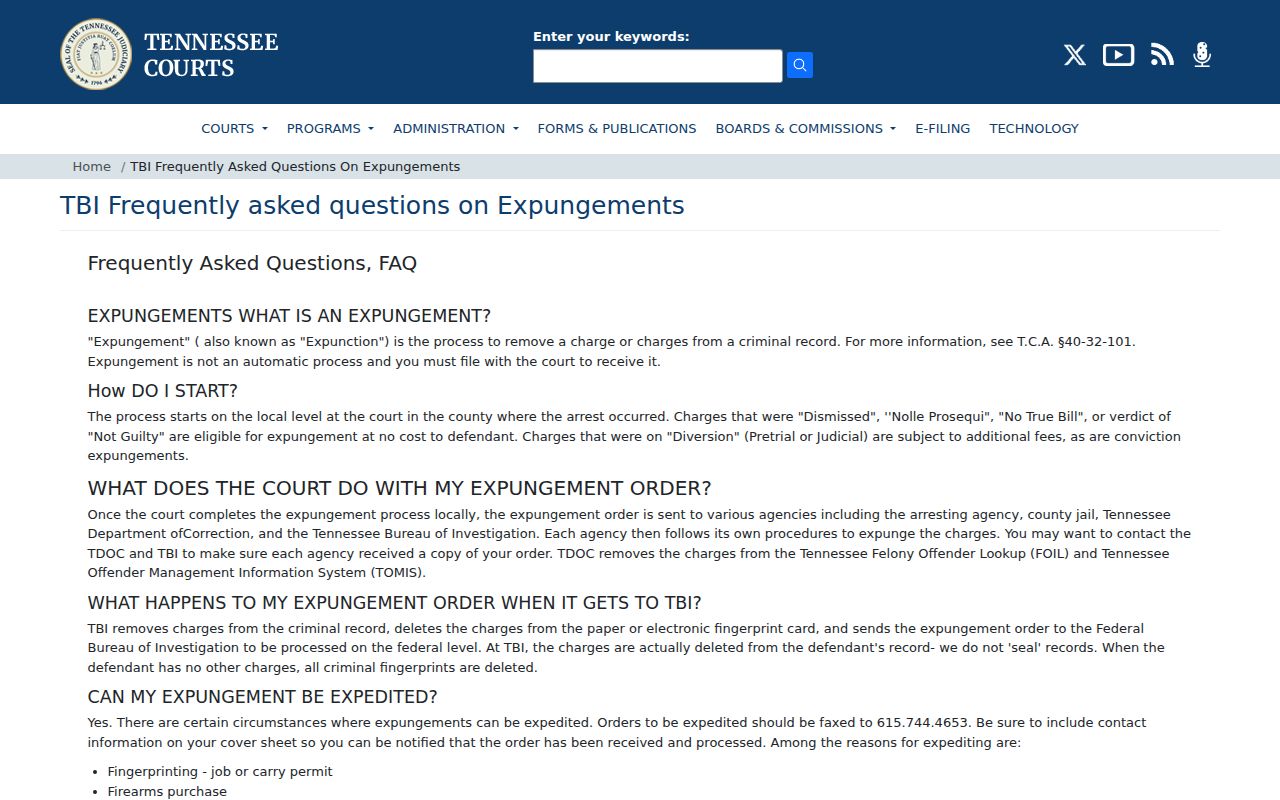
The state page helps identify a possible route, but the Haywood County clerk must confirm the local docket and current filing requirements.
How a Criminal Case Moves
A Haywood County felony allegation often appears first in General Sessions. That court handles the warrant, initial appearance, bond, and preliminary steps. Grand-jury review can follow. A true bill creates an indictment that moves into Circuit Court for arraignment, pretrial motions, plea or trial, disposition, and sentencing. A misdemeanor may remain in General Sessions. Appeals and transfers produce more entries and can move the record onward.
Case flow: Charges Filed › Arraignment › Pretrial › Plea or Trial › Disposition › Sentencing
This flow is a record map, not a promise that every case reaches each stage. A prosecutor may decline or amend a charge. A grand jury may no-bill it. A court may dismiss it, and a defendant may be acquitted.
Correcting Haywood County Case Records
When a Tennessee Bureau of Investigation cycle lacks the final result, the local certified disposition is key evidence. Obtain the docket number and a certified copy from the Haywood County clerk. Compare the charge, arrest date, and identifiers with the Tennessee Open Records Information Services result before describing the mismatch to TBI. A name result may be a possible match, and the public TORIS search does not include aliases.
The Tennessee courts' filing steps show that an expungement request begins in the court where the matter originated.
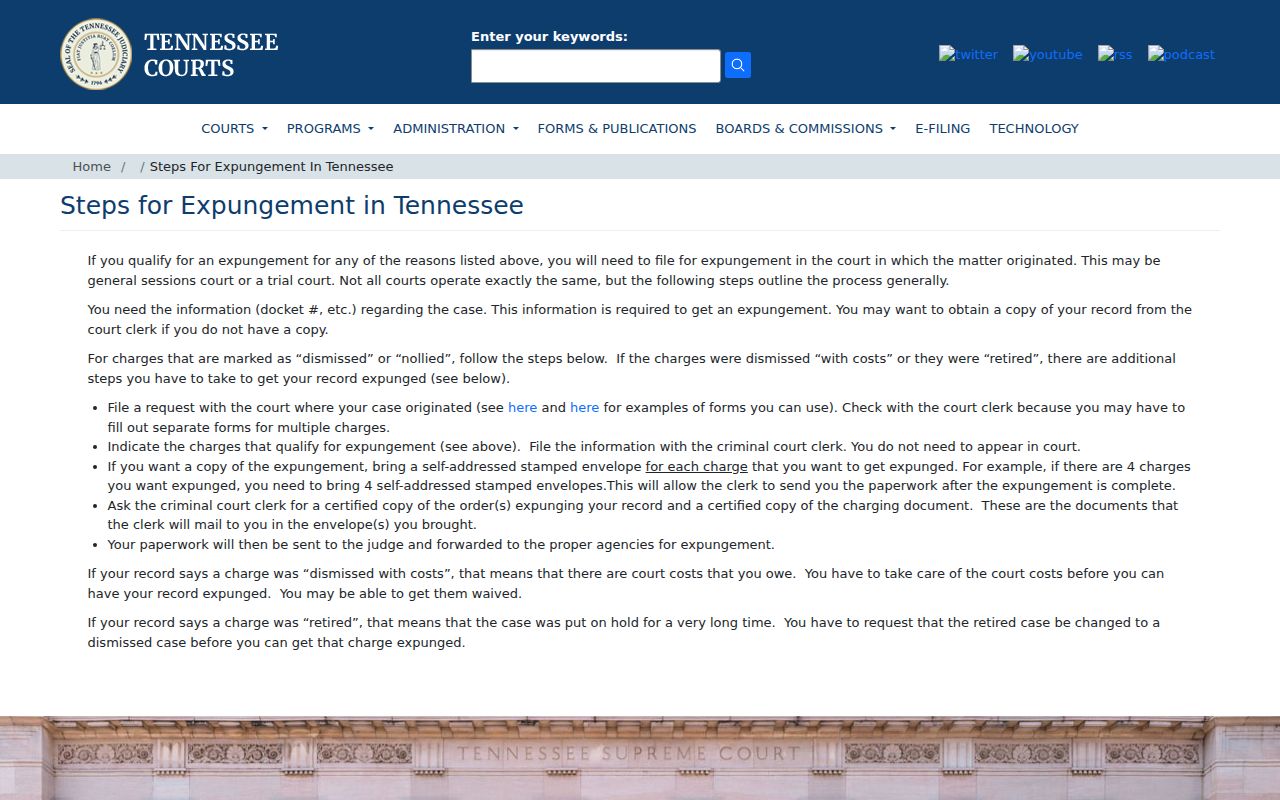
After a qualifying order is signed, the court routes it to agencies such as the arresting department, jail, Tennessee Department of Correction, and TBI. Keep a certified copy in case one record remains visible.
Case Record Access & Restrictions
Tennessee Supreme Court Rule 34 governs public access to court records, while the Tennessee Public Records Act governs many state and local agency records. They are not the same channel. Request a Haywood County case from the clerk. Request an arrest narrative from the arresting agency and a booking sheet from the sheriff. Juvenile files, sealed or expunged material, minor-victim identifiers, medical data, and other protected fields may be withheld or redacted.
Access point: Ask for the segregable public part of a file when protected data is present. A redaction does not always require withholding the whole record.
The state TPRA guidance explains inspection, agency policies, coordinators, and possible copy or labor charges.
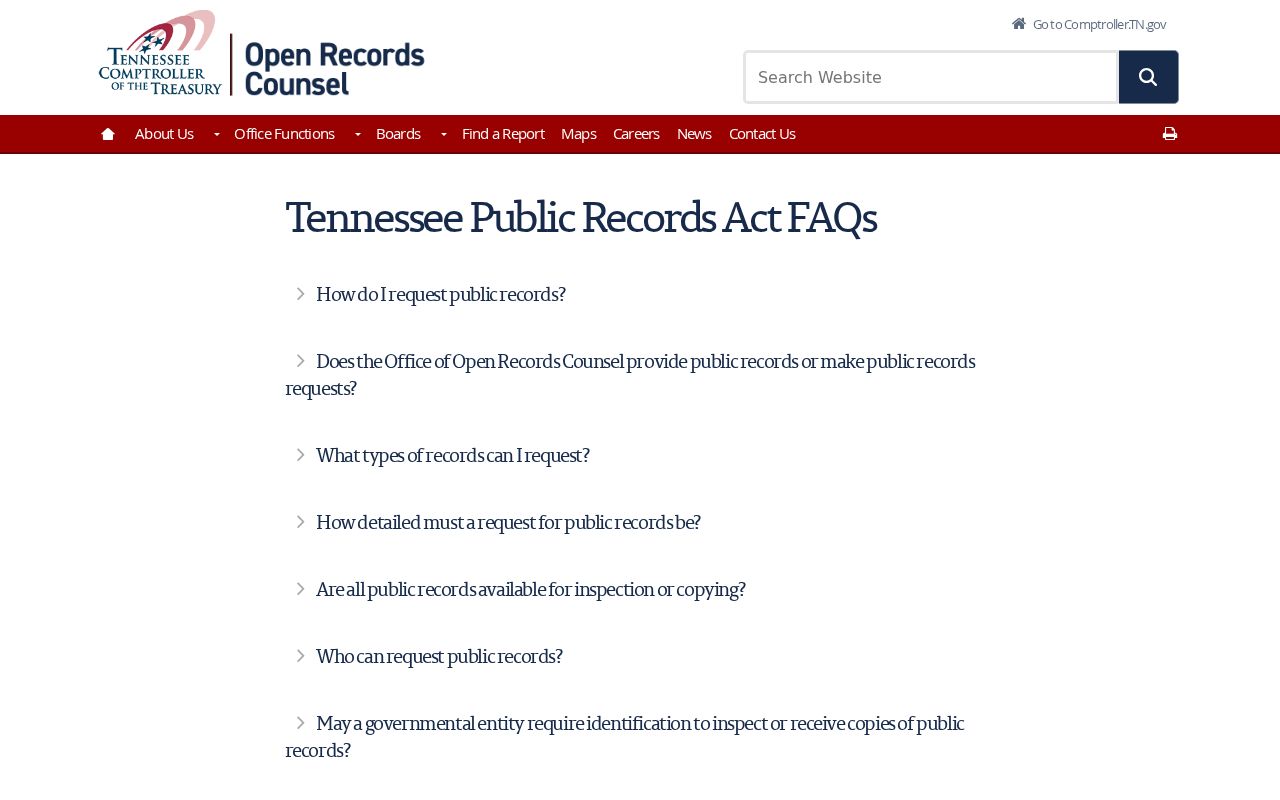
For the court file itself, confirm access and certification with the Haywood County clerk rather than assuming an agency request reaches the same record.
Haywood County Cases After Sentence
The judgment remains in the court file after sentencing, but current supervision or custody may sit in another system. Adult felony probation and parole are state-run through Tennessee Department of Correction Community Supervision. The TDOC field-office directory routes Haywood County to the proper office.
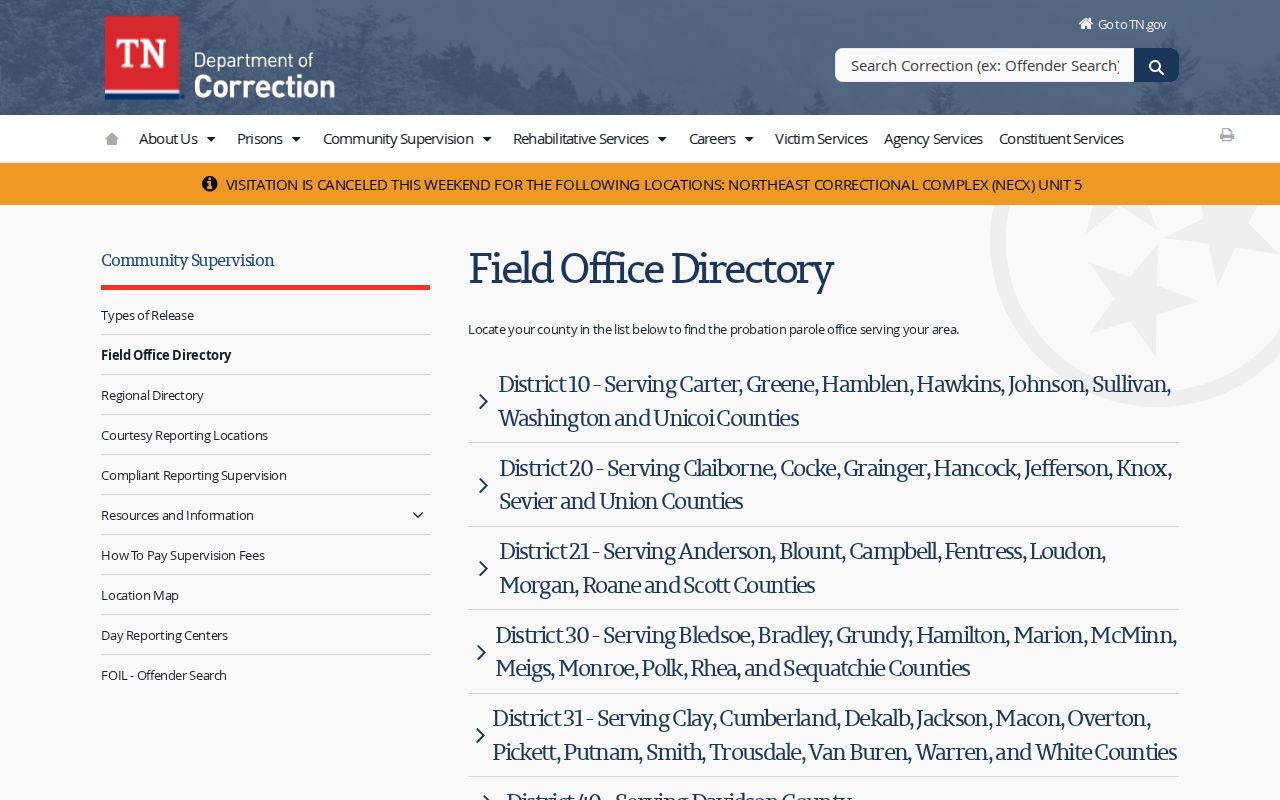
The directory identifies the supervision contact; it does not replace the clerk's judgment or complete docket.
Parole decisions and hearing resources come from the Tennessee Board of Parole.

A Board of Parole page may explain a later release stage, while the Haywood County case file remains the source for the conviction and sentence. For the booking events that preceded the case, use the county arrest lookup routes.